
About
About IOTHub
IOTHub is where I build ESP8266/ESP32-based IoT devices myself and share the hands-on notes and tools that pile up along the way.
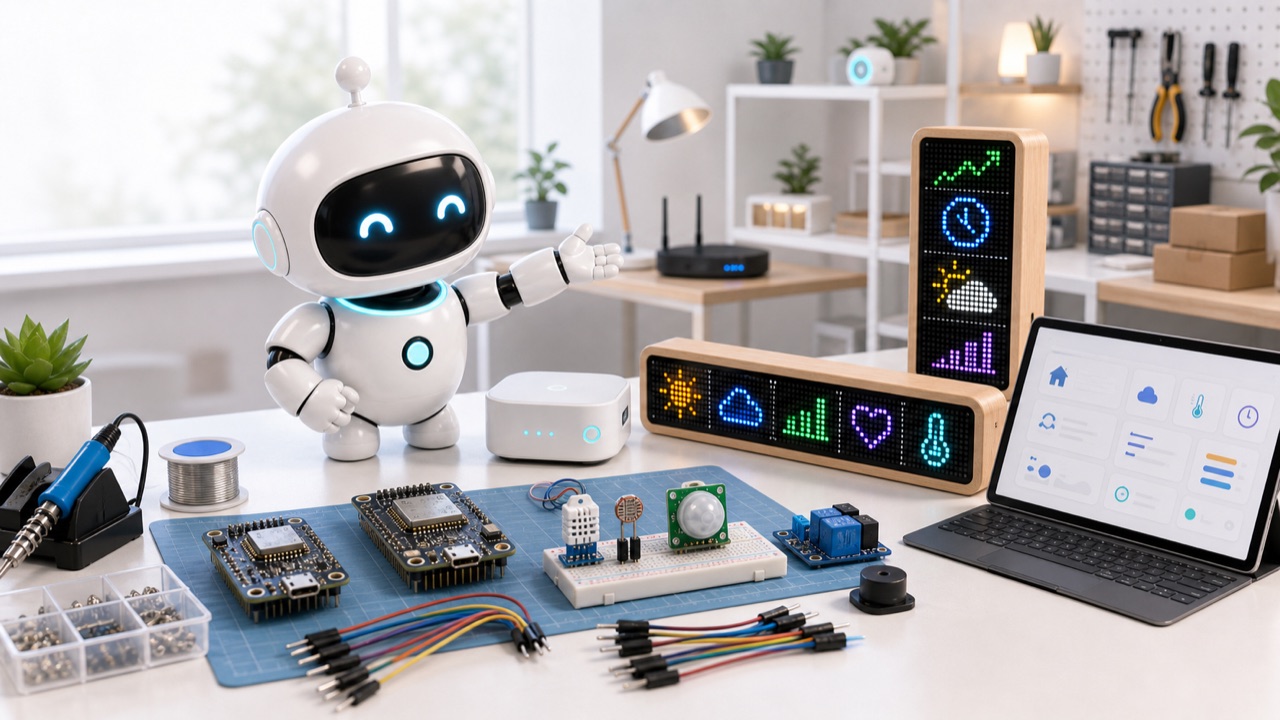
What this site is about
Rather than grand theory, I document the problems I ran into — and how I solved them — while making things that actually run at home and in the office. From the wiring of a single sensor to the brain (hub) that ties many devices together, automatic control, and over-the-air updates, I try to record not just the finished result but what it took to get there, so anyone following along can sidestep the same traps.
What you'll find here
- Build guides — real project logs such as the "Home IoT Hub" sensor-node series and the LED price-ticker build.
- Board, sensor & software references — ESP board setup, sensor pinouts and measurement characteristics, and getting the dev tools ready.
- Practical web tools — subnet, IP, DNS, JSON, JWT, regex, chmod and more: values you check often in operations and development, computed right in the browser. No database, lightweight by design.
- Practical glossaries — IT, networking, security, and AI terms with meanings, acronyms, and representative solutions.
Custom builds
I also take requests for custom IoT devices and information displays (LED tickers and the like). What it shows, what it does, and how big it is are all tuned to the person using it. For details, reach out through the contact page.
How it runs
Most of the web tools run entirely in your browser and never store your input on a server. The site is built around static pages so it runs comfortably even on a small server, and the material keeps growing as real build experience accumulates.
Editorial standard
IOTHub tries to document both the build sequence and the failure causes. A page that only lists part names and pin numbers may be searchable, but it is not enough when a real device fails in the field. That is why power stability, Wi-Fi reconnection, MQTT topic structure, sensor data quality, and firmware update strategy are being strengthened across the site.
Even when outside references are used, the final article should connect back to IOTHub's own build flow. The goal is for readers to move naturally from one article to the build guides, board selection, and decision notes that help with the next practical step.
Current improvement direction
The site is being cleaned up by reducing thin list-style pages and strengthening articles that are worth reading on their own. Power issues, MQTT structure, OTA update strategy, and board selection are more useful to builders than shallow pages that only repeat basic definitions.
Existing articles are also being connected with internal links. Board selection leads to ESP8266 and ESP32 decision notes, while MQTT articles connect to local logging and power stability. This structure helps readers move to the next practical page instead of leaving after a single short article.
Operating standard
IOTHub focuses less on listing many parts and more on documenting what must be checked for a small device to keep working in a real space. Even with the same sensor, the result can change greatly depending on installation position, power margin, wireless conditions, and enclosure structure.
When writing a guide, the site does not leave only the wiring sequence. It also records what to check first when something fails. A front-door sensor must account for magnetic interference from a steel door, a temperature and humidity sensor must be kept away from heat-generating parts, and a particulate-matter sensor needs measurement intervals that respect fan lifetime. If those conditions are missing, the sample code can be correct while the field device remains unstable.
For that reason, the articles are organized as both a build flow that beginners can follow and an operating memo that can be revisited later during maintenance.