
Stories & Notes
Stories and Notes
These notes explain ESP boards, wireless communication, sensor data, firmware updates, and development tools from a builder's perspective. The goal is not to repost news, but to explain what changes in actual device decisions.
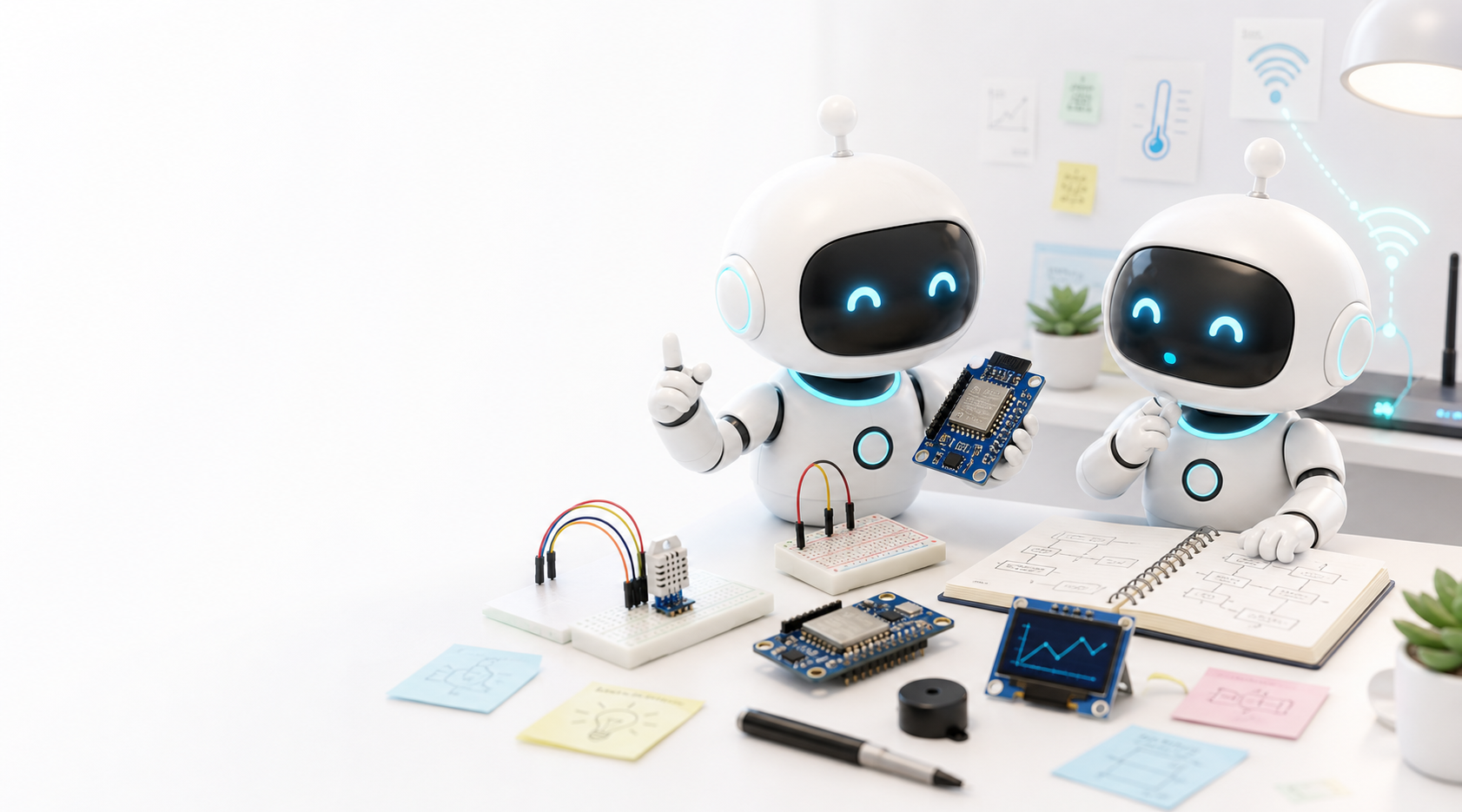
Why these notes exist
IoT decisions often depend on context more than raw specifications. ESP8266 is old, but not automatically obsolete. ESP32 is more capable, but not automatically the best board for every installation. A simple Wi-Fi sensor node, a BLE-configured device, and a field device that needs OTA updates have different tradeoffs.
This section collects those decisions in plain language: when ESP8266 is still useful, why wireless choices are expanding in the ESP32 family, and why firmware update strategy matters for field devices.
Recent notes
Could AI Glasses Become the Next IoT Control Interface?
How AI glasses may connect cameras, voice, small displays, and field IoT devices.
Why Wireless Choices Are Expanding in the ESP32 Family
Why builders should look beyond Wi-Fi and consider BLE, Thread, and Zigbee for some deployments.
Why Firmware Update Strategy Matters for Field IoT Devices
What OTA means, when field devices need it, and what ESP8266 or ESP32 builders should prepare before deployment.
Sensor Data Quality Starts With Installation Conditions
Power, wiring, placement, and calibration can matter more than the sensor part number.
Why MQTT Devices Still Need Local Logs
When the network fails, local device state is often the only way to understand what happened.
Is ESP8266 Still Useful?
ESP32 is common, but ESP8266 can still be a practical choice for simple Wi-Fi devices.
Read with build guides
These notes are most useful when read with build articles. The OTA strategy note connects to the remote firmware update guide, while the sensor data quality note pairs with practical measurement builds such as the [Part 3] Stop guessing room comfort.
Editorial standard for these notes
The story section is intentionally connected to the build guides. A news-style note is kept only when it helps explain a practical design choice: why OTA strategy matters, why sensor placement changes data quality, why local logs still matter next to MQTT, or why an older board such as ESP8266 can still be useful in a narrow role.
When a topic is only hype, it is not useful here. The goal is to translate trends into decisions that affect real hardware: which radio to use, when to move from ESP8266 to ESP32, what must be logged locally, and how a device should fail safely when cloud access is unavailable.
This keeps the notes tied to hands-on IoT work instead of becoming a link list. Readers should be able to leave a note with one clearer engineering decision for a sensor node, dashboard, firmware update, or home automation rule.
Standard for keeping story articles
The story category is not a place for loose notes. It is kept for topics that affect real build decisions: why ESP8266 can still be useful, why OTA matters, why sensor-data quality depends on installation conditions, and why local logs still matter in small IoT systems.
Even a news or opinion article should connect back to actual build work. After reading it, at least one decision should become clearer: board selection, power structure, wireless method, maintenance plan, or failure behavior. A simple trend summary does not raise the practical value of the site.
Going forward, articles in this section should be connected to related build guides through internal links, and external references should be used only when the context is clear. The goal is for both readers and search engines to understand that the article comes from practical IoT build experience.